Orion's journey to the Moon
NASA's Artemis I, 25 days, three phases. Earth → outbound transit → distant retrograde orbit → return → splashdown.
data.shape: "function"
Read →
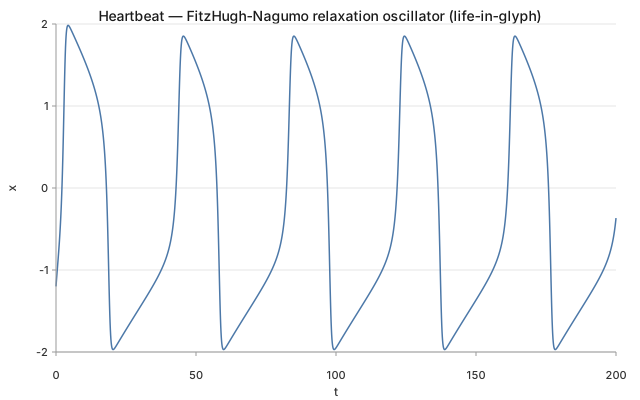
A heartbeat at rest
FitzHugh-Nagumo (1961) — the relaxation oscillator that produces the spike-and-recover rhythm. 60 BPM. Lub-dub.
data.shape: "trajectory"
Read →
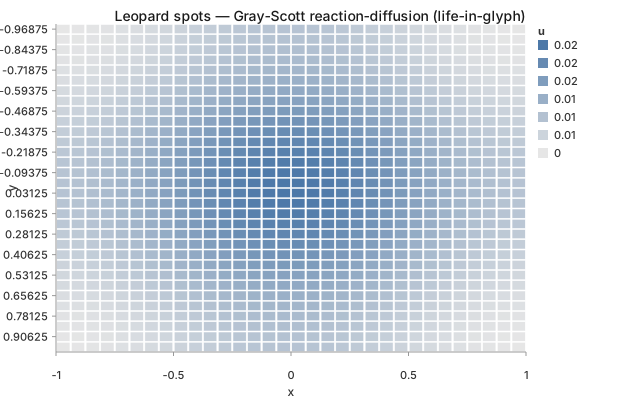
How the leopard got his spots
Kipling's 1902 just-so story, Turing's 1952 chemistry. A single seed in a uniform field, the Gray-Scott PDE, and 400 steps later: spots.
data.shape: "pde-solve"
Read →
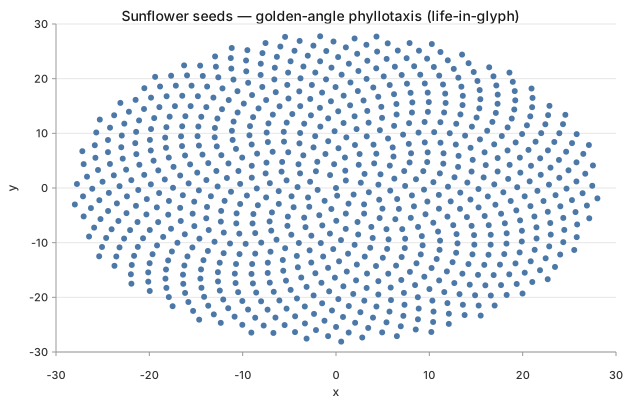
A sunflower's secret math
Vogel's 1979 model — every seed placed at √n and n × 137.5°. The only angle that fills a disc without leaving gaps.
data.shape: "recurrence"
Read →
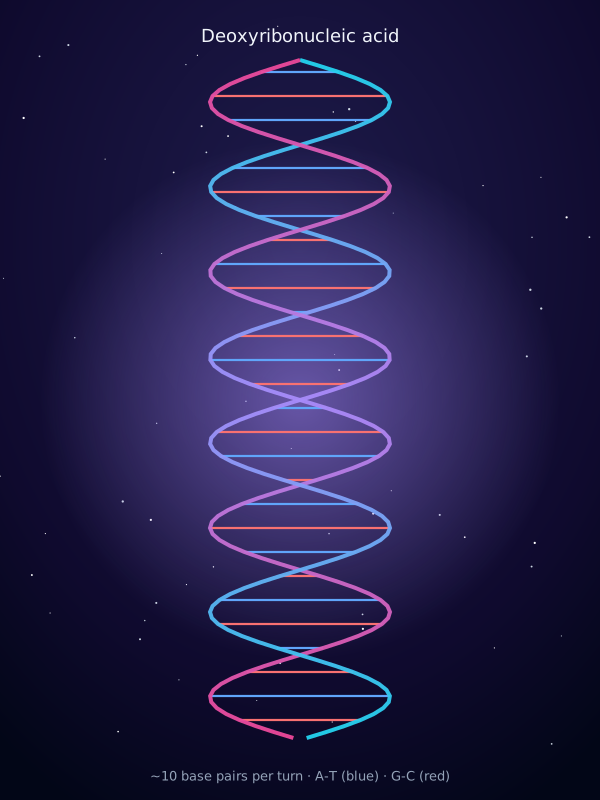
DNA — the double helix
Two phosphate strands winding at ten base pairs per turn, against a deterministic starfield. The first scene rendered entirely from a compose spec — gradients, polylines, silhouette-paths, starfield.
compose · RFC #9
Read →
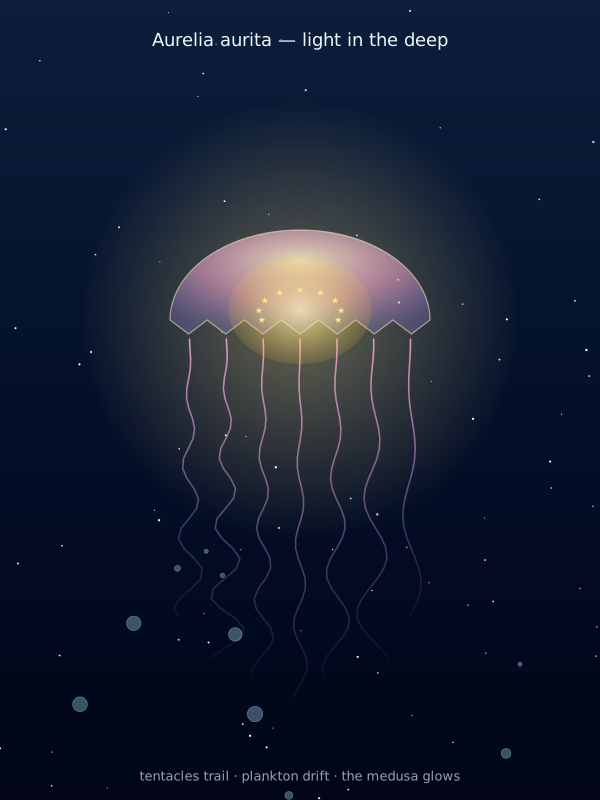
A jellyfish in the deep
Aurelia aurita — translucent bell, seven sinusoidal tentacles, bioluminescent dots glowing in the dark. Compose grammar from gradients, glow, ellipse, silhouette-paths, and a 80-dot plankton starfield.
compose · RFC #9
Read →
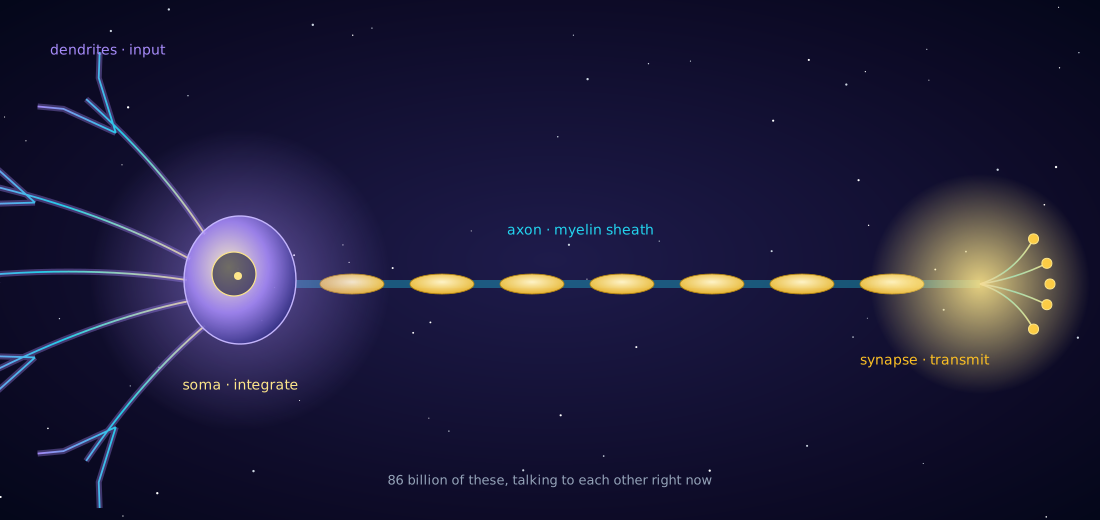
A neuron firing
Pyramidal cell: dendrites collect, soma integrates, axon fires, synapse transmits. Silhouette-paths + radial-gradient soma + dual glow halos paint the cell that thinks.
compose · RFC #9
Read →
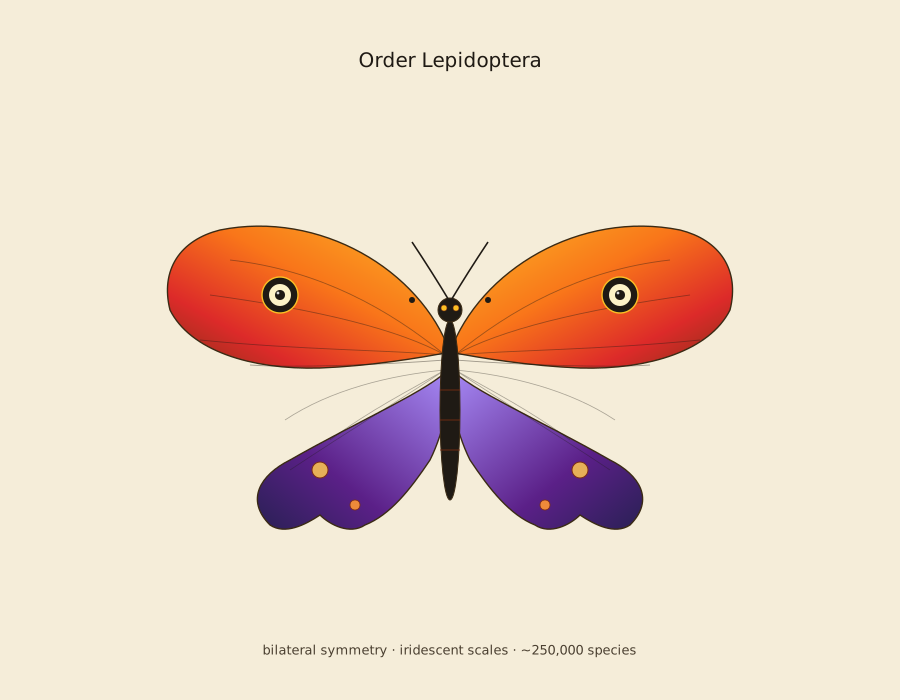
A butterfly's wing
Order Lepidoptera. Bilateral symmetry: same wing polygon reflected across the body. Two pairs of polygons, gradient sunset → twilight fills, eyespots in white-and-black.
compose · RFC #9
Read →
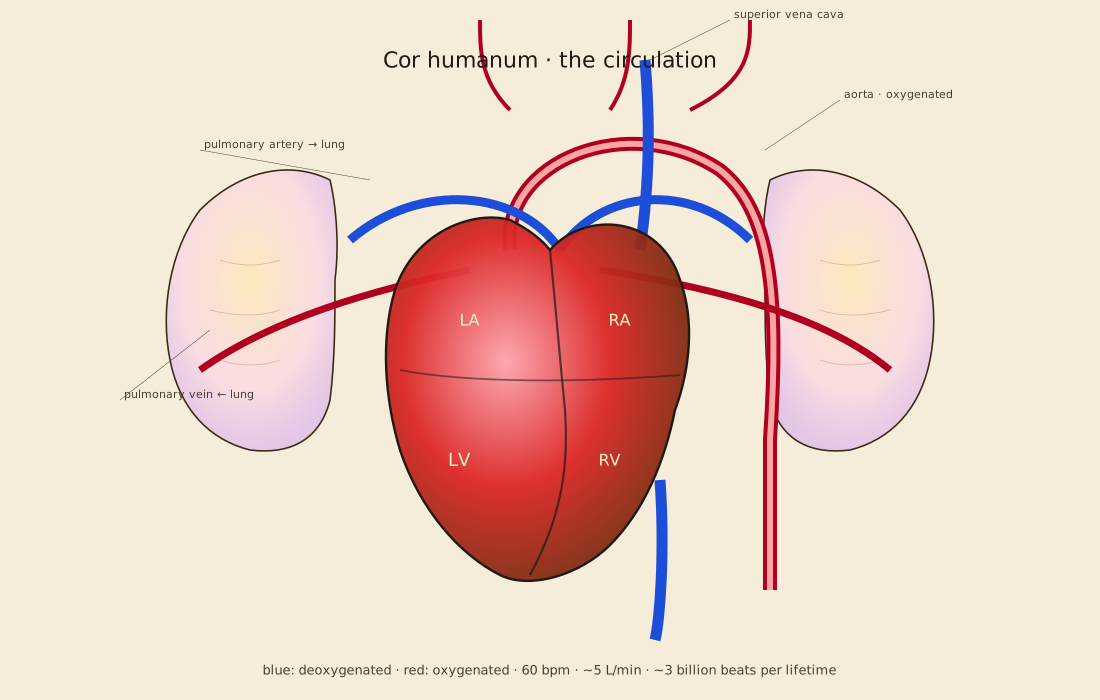
A heart + circulation
Anatomical front view: four chambers, aorta, pulmonary trunk, vena cavae, lungs. Pencil-on-parchment. The heart pulses at 67 bpm via SMIL.
compose · RFC #9 + RFC #6 pulse
Read →